
GAOQIAO Catalog Page
Normal Wire Controller
Normal Wire Controller is one type of our traffic light controller system.
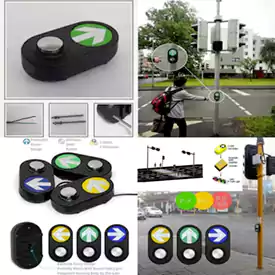
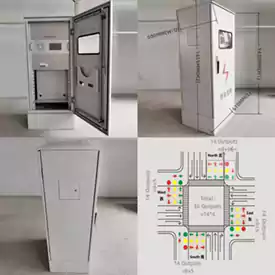
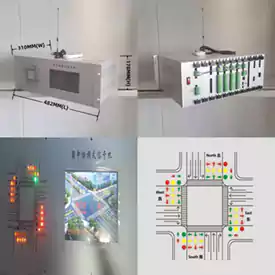
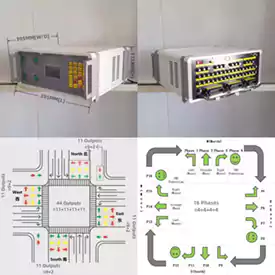
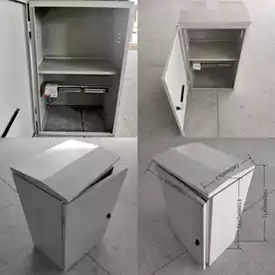
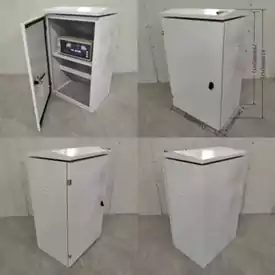
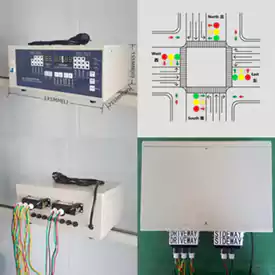
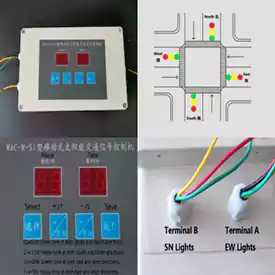
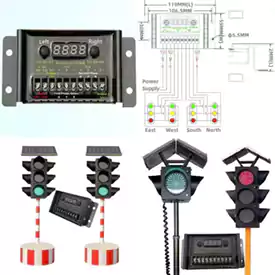
A normal wire controller (also called a wired traffic signal controller or hard-wired intersection controller) is the on-street cabinet that runs the timing and phasing logic for a signalized intersection, with all signal heads, detectors, and push-buttons connected via dedicated copper wiring. For project buyers specifying wired controllers in volume, the critical decisions are phase count (2, 4, 8, or 16), conflict monitoring standard (NEMA TS 2 vs. EN 12675), detector input count, and whether the cabinet supports central system telemetry (UTCS, SCATS, SCOOT compatible). GAOQIAO has manufactured wired traffic signal controllers for export since 2008, with deployments in more than 60 countries.
Technical Specifications
| Parameter | Standard Range |
|---|---|
| Phase count | 2 / 4 / 8 / 16 phase versions |
| Standards compliance | NEMA TS 2, EN 12675, GB 25280 |
| Detector inputs | 8 to 64 vehicle + 8 to 16 pedestrian |
| Output channels | 16 to 64 field outputs, 5 A or 10 A per channel |
| Display | 7-inch LCD touchscreen + 12-button keypad |
| Communication | RS-232, RS-485, Ethernet, optional 4G/GSM |
| Conflict monitor | CMU per NEMA TS 2, optional EN 12675 MMU |
| Power supply | AC 110/220 V, 50/60 Hz, with 8-hour UPS backup |
| Operating temperature | -40 °C to +70 °C cabinet-rated |
| Cabinet | Aluminum, IP54, with heater and ventilation |
How to Choose the Right Wired Signal Controller
Wired controller selection begins with the intersection geometry: how many phases, how many vehicle and pedestrian movements, and whether the controller must interface with an upstream central system. A 4-phase isolated intersection is a fundamentally different controller than an 8-phase arterial with transit signal priority.
Buyers often over-specify phase count. A typical 4-leg urban intersection with protected left turns needs only 8 phases; specifying a 16-phase controller adds cost and complexity without operational benefit. Match the phase count to the intersection's worst-case movement map, not the theoretical maximum.
Conflict monitoring is a safety-critical decision. NEMA TS 2 specifies a Conflict Monitor Unit (CMU) that independently verifies green-field outputs and forces the intersection to flash if a conflict is detected. EN 12675 specifies a Malfunction Management Unit (MMU) with similar but not identical behavior. Always match the monitor standard to the destination country's intersection safety regulation.
Central system compatibility is the most common retrofit headache. If the controller will connect to a central system (UTCS, SCATS, SCOOT, or a proprietary ATMS), confirm the protocol version and physical layer before order. GAOQIAO controllers support all four major central system protocols via plug-in communication modules that can be swapped in the field.
Key Features and Benefits
Conflict Monitor with Safety-Rated Outputs
Every GAOQIAO wired controller ships with a NEMA TS 2 CMU or EN 12675 MMU as standard. The monitor runs an independent logic check on every output transition and forces the intersection to flashing red within 200 ms if any conflict is detected. This is the safety-critical element that protects against field wiring errors and lightning-induced logic faults.
Modular Communication for Central System Integration
Communication modules are plug-in cards rather than built-in: swapping a UTCS module for a SCATS or SCOOT module takes 10 minutes in the cabinet, no firmware change required. This makes the same controller hardware deployable across multiple central system standards without a different SKU.
8-Hour UPS with Automatic Transfer
An internal UPS bridges the controller through a typical 4-8 hour power outage, keeping the intersection on its planned timing plan rather than defaulting to flash. The UPS is field-replaceable and uses standard sealed lead-acid or LiFePO4 battery modules.
Common Applications
Normal Wire Controller products are specified in a wide range of projects:
- Urban isolated intersection (4-phase wired controller)
- Arterial coordinated corridor (8-phase with central system link)
- Downtown grid network (16-phase multi-intersection coordination)
- Truck and freight terminal (high-power outputs for heavy signal loads)
- Airport ground vehicle intersection (with red/green clearance logic)
- Port and intermodal yard (with custom phase mapping)
- University and hospital campus (pedestrian-priority phase weighting)
Related GAOQIAO products: solar wireless controller, traffic signal board, customized board, service.
Installation and Maintenance
Installation requires a concrete controller cabinet foundation, an in-ground conduit run to each signal pole, and 110/220 V service to the cabinet. A typical 4-phase controller cabinet is installed and commissioned in 2-3 days by a 2-person crew (electrician + signal technician). Commissioning includes phase mapping, detector setup, timing plan upload, and conflict monitor self-test. Maintenance is a semi-annual conflict monitor test (required by NEMA TS 2) and an annual UPS battery test, both documented in the supplied maintenance log.
Certifications and Compliance
All wired controllers are manufactured under ISO 9001:2015 quality systems and tested per NEMA TS 2 (North America), EN 12675 (Europe), or GB 25280 (China) before shipment. Each cabinet ships with a calibration certificate, conflict monitor test report, and 3-year warranty. Optional factory acceptance testing (FAT) with the customer's engineering team is available at no additional charge for orders above 10 units.
Why Choose GAOQIAO
GAOQIAO has supplied wired traffic signal controllers to municipal authorities and traffic system integrators in more than 60 countries since 2008. Our 12,000 m^2 Nanjing facility produces 1,000+ controller cabinets per year, with custom phase counts and communication modules from a 20-unit minimum. We ship complete kits (cabinet + controller + conflict monitor + UPS), which eliminates the multi-vendor integration that delays most intersection modernization projects by 6 to 12 weeks.
Customer Inquiry
Leave A Message
Send your inquiry and leave your email. Our sales team will reply with product details, quotation and delivery information.